PFL Africa Season 1: A Defining Year for African Mixed Martial Arts
PFL Africa Season 1 marked a major turning point for mixed martial arts on the continent. Spanning four countries and delivering a true tournament format, the season crowned Africa’s first PFL champions while showcasing elite talent, viral finishes, and world-class production. More than a fight series, PFL Africa established a clear pathway for African fighters and positioned the continent as a permanent force in global MMA.
Aminu Jibril
1/1/20263 min read
PFL Africa Season 1: A Defining Year for African Mixed Martial Arts
The inaugural season of PFL Africa marked a decisive shift in how African mixed martial arts is structured, showcased, and valued on the global stage. Rather than a one-off showcase, PFL Africa Season 1 delivered a full, merit-based tournament system across multiple weight classes, hosted entirely on African soil, and built around African fighters.
From South Africa to Rwanda and Benin, the season established a clear message: Africa is no longer a feeder region for global MMA — it is now a destination.
A Continental Footprint with Global Standards
Season 1 spanned four major events across four African cities:
Cape Town, South Africa – GrandWest Arena
Johannesburg, South Africa – Big Top Arena, Carnival City
Kigali, Rwanda – BK Arena
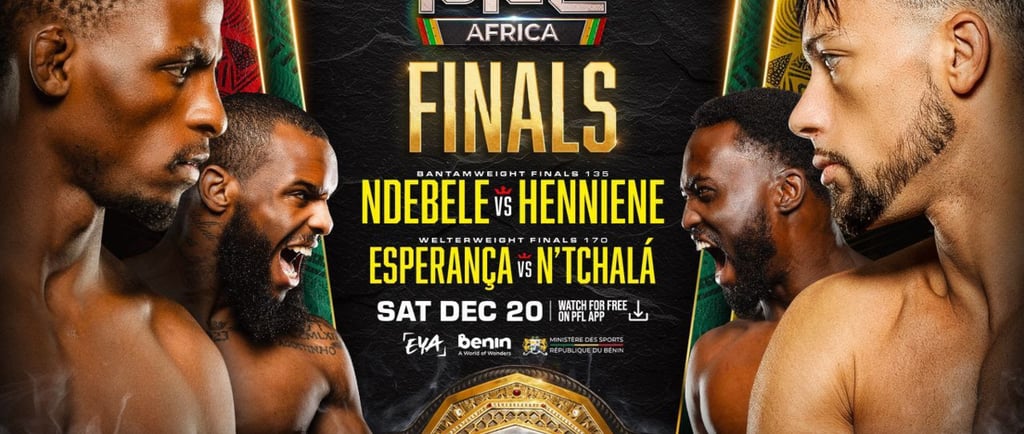
Cotonou, Benin – Sofitel Dome (Finals)
Each event followed Professional Fighters League’s global tournament format: win-and-advance brackets, clear progression, and championship prizes tied to performance rather than promotion politics. This structure gave African fighters something the continent has historically lacked at scale — clarity, fairness, and visibility.
Champions Who Defined the Season
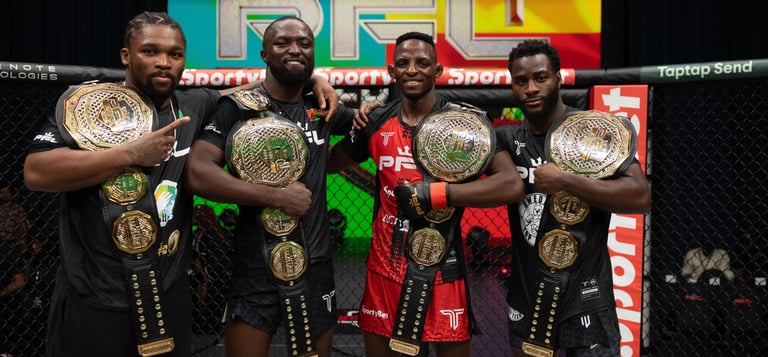
PFL Africa crowned four inaugural champions, each representing a different corner of the continent:
Nkosi Ndebele (South Africa) – Bantamweight Champion
A composed, pressure-heavy fighter whose championship body-kick knockout in the finals became one of the season’s defining images.Wasi Adeshina (Nigeria) – Featherweight Champion
Blending wrestling control with intelligent striking, Adeshina’s run reinforced Nigeria’s growing depth beyond its established MMA stars.Yabna N’Tchala (Guinea-Bissau / Angola) – Welterweight Champion
His resilience and late-fight dominance symbolised the tournament spirit, particularly in a final that turned on endurance and composure.Abraham Bably (Ivory Coast / United Kingdom) – Heavyweight Champion
Bably’s rapid knockout in the finals delivered one of the most viral moments of the season and underlined the entertainment value African heavyweights bring.
These champions were not built overnight. Many had competed across regional promotions, travelled extensively, and fought without consistent financial backing before PFL Africa offered a true platform.
Matchups and Moments That Carried the Season
Several bouts and moments pushed PFL Africa into wider global conversation:
Dwight Joseph’s flying knee knockout in Johannesburg circulated widely across MMA media platforms.
Nkosi Ndebele’s finals finish became a visual shorthand for the level of striking now present in African MMA.
Abraham Bably’s finals knockout reinforced heavyweight excitement in a division often overlooked on the continent.
Multiple high-paced, finish-heavy cards challenged outdated narratives that African MMA is raw or underdeveloped.
The season consistently delivered action that travelled well beyond the arenas, reaching digital audiences across Africa, Europe, and North America.
Executive Leadership and Strategic Vision
Season 1’s success was not accidental. It reflected deliberate executive investment and long-term planning.
Key leadership figures present across the season included:
Peter Murray, Chief Executive Officer of the Professional Fighters League
Mike Kogan, Founder of the Professional Fighters League
Ray Sefo, President of Fighter Operations, whose involvement ensured fighter standards, matchmaking integrity, and athlete welfare
James Frewin, Senior executive overseeing PFL’s international expansion, including Africa
Their presence at multiple events sent a clear signal to fighters, regulators, and partners: Africa is not an experiment — it is a pillar of PFL’s global future.
The Broader Impact on African MMA
PFL Africa Season 1 delivered impact across several layers:
Athlete Pathways
Fighters now see a clear route from regional competition to continental titles and global contracts.Economic Opportunity
Events created jobs for local crews, officials, medical teams, media professionals, and venue staff — embedding MMA into local economies.Infrastructure Confidence
Hosting events in top-tier arenas across multiple countries proved Africa’s readiness for regular elite combat sports production.Narrative Shift
African fighters were presented as professionals, not prospects — champions, not background stories.
Conclusion
PFL Africa Season 1 did more than crown champions. It validated African MMA as a structured, commercially viable, and globally relevant ecosystem.
For fighters, it created belief.
For fans, it created ownership.
For the sport, it created permanence.
As future seasons expand divisions, talent pools, and international crossover, Season 1 will be remembered as the foundation — the year African MMA stepped fully into its own.